
Texas icehouses have gone through more changes than the college football playoff bracket. They are products of evolution. Over the course of the 20th century, they evolved into convenience stores, bait shops, neighborhood taverns and community beer joints, but in the beginning, it was all about ice.
Before refrigeration, Texans needed ice to keep things cold. By the early 20th century, many households had ice boxes which were nothing more than insulated cabinets chilled with blocks of ice. That ice had to be replenished every 2 or 3 days.
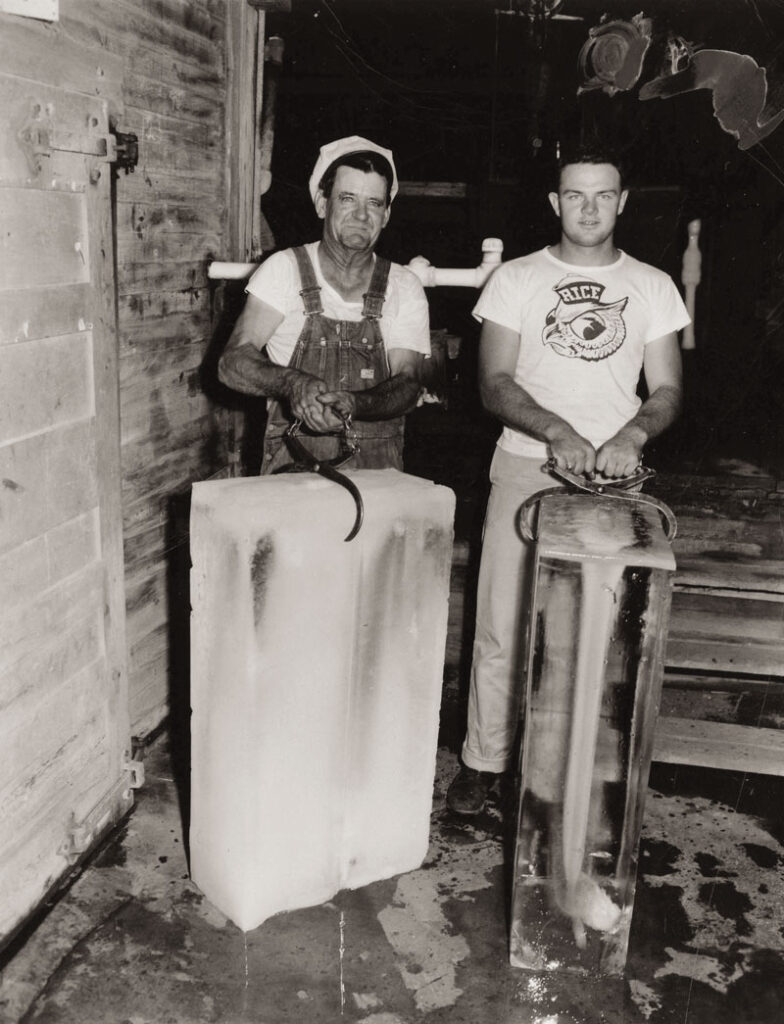
By the 1920s just about every Texas community of any size had an icehouse that made and sold ice. Drippy ice wagons delivered it all over town. The importance of ice is hard to overstate. Households and cafes depended on it to keep food from spoiling. Ice was not a luxury but a necessity.
In Fredericksburg customers bought ice at Stein’s Icehouse on the 200 block of West Schubert Street. Stein’s Icehouse had an 80hp steam boiler that generated the power to make ice. Capt. Charles Schreiner owned a similar operation in Kerrville.
Over time icehouse owners looked for opportunities to grow their businesses. They already had vaults for keeping ice. Why not use the vaults to store other kinds of food that needed to be kept cold?
In Fredericksburg local dairymen John and Alonzo Evers bought Stein’s Icehouse. The new owners stored milk in the vault with the ice. Icemen and dairymen were natural partners. The two businesses complemented each other. The idea of storing perishables in the ice vault took hold in other parts of Texas as well. Icehouses stocked and sold milk, butter, soft drinks, ice cream and other food items that needed to be kept cold.
When electric refrigerators became available and the ice business declined, icehouse owners added cigarettes, candy, bread, canned goods, cold cuts and even hardware to the inventory. They put in gas pumps and sold gasoline. They didn’t make ice, but they sold it. Customers still called them icehouses. The next generation called them convenience stores.
One legendary icehouse/convenience store began in 1927 when John Jefferson Green, an employee of the Southland Ice Company of Dallas, began selling milk, eggs and bread from the dock of the icehouse where he worked in South Oak Cliff. That business evolved into 7-Eleven.
Icehouses all over Texas sold the usual bill of goods along with a list of items that varied depending on location. In towns like Llano and Burnet, located close to Lake Buchanan, icehouses sold live bait, tackle and other fishing supplies. In counties with large deer populations, like Llano, Kerr, Blanco and Gillespie counties, icehouses sold ammo, deer corn and hunting licenses. They also provided cold storage for dressed deer carcasses.
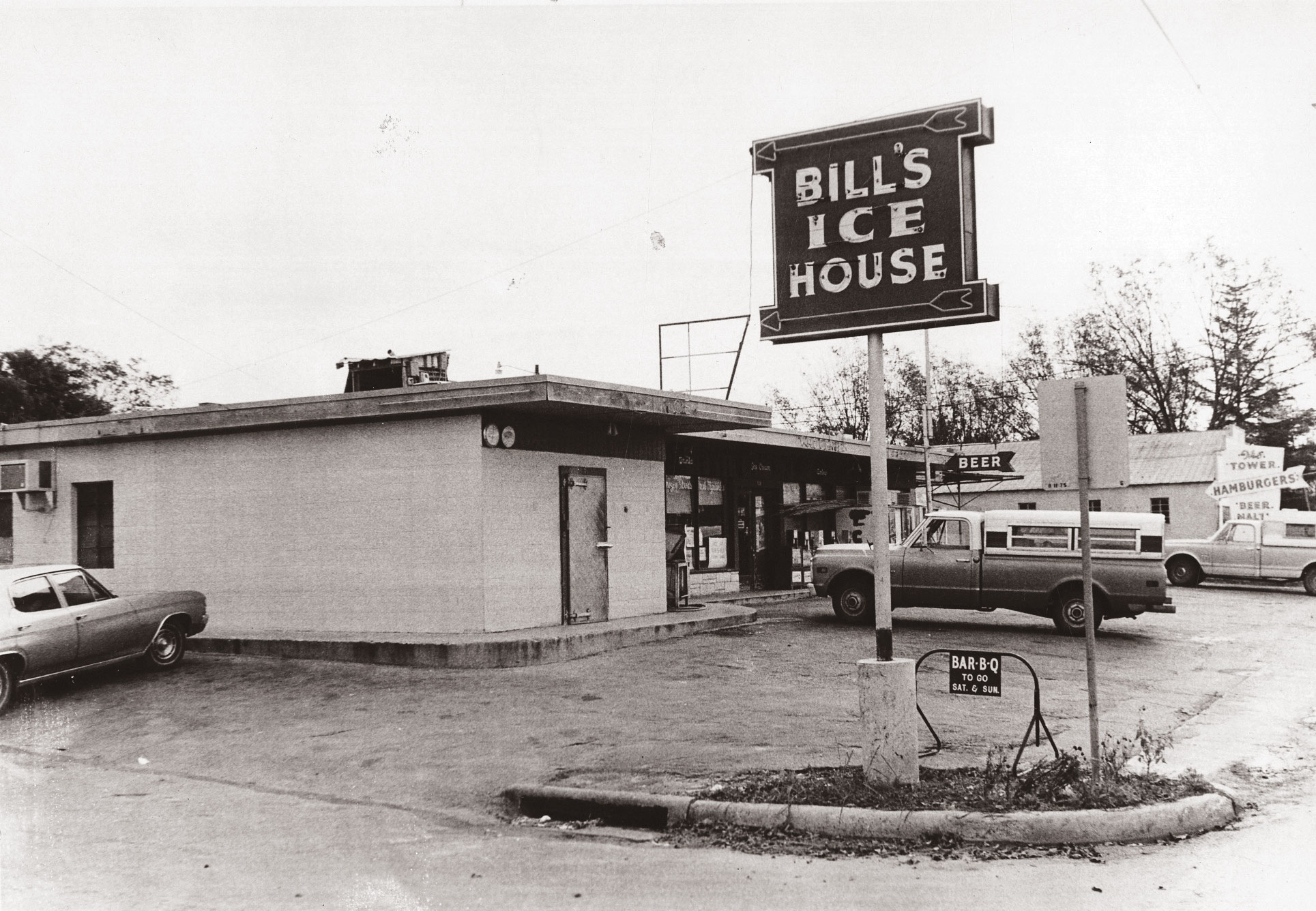
In San Antonio and South Texas, where summer is hot and beer-drinking is a part of the culture, icehouse owners stocked plenty of cold brew in the ice vault. To draw in customers in the days before air-conditioning, owners set up tables and chairs outside under the trees or inside by the ice vault to take advantage of the cool air. Men would stop by after work, have a couple of beers and shoot a game of pool before going home.
On weekends South Texas icehouse owners made and sold barbecue, hamburgers or chili and tamales. They might occasionally bring in some live music. Whole families would spend Saturday evenings and Sunday afternoons having fun at the local icehouse. Kids played hide and seek, baseball or freeze tag. Adults played cards or dominoes or just sat around and drank beer. South Texas icehouses became community centers and neighborhood taverns. The icehouse was a backyard for the entire neighborhood.
In the German Hill Country, icehouses became the equivalent of beer gardens which had fallen out of favor during the war years. In Fredericksburg, Jim’s Icehouse on West Main Street, 87 Ice Box on the Comfort Highway and Willie’s Ize Box on East Main Street catered to locals and an increasing number of Hill Country visitors. By the 1960s, every major road into town had an icehouse.
Old-time South Texas icehouses were neighborhood creatures. Like folk art, they reflected local culture, but they all had a few icehouse essentials. At one time they made or sold ice. They had indoor and outdoor seating. They were family friendly, laid back and informal. They were often made of wood or rusty tin. Some of them had former lives as general stores or filling stations before becoming icehouses. They were honest and unpretentious. They didn’t serve wine, cocktails, aperitifs or even IPAs. They served beer, brewed in the USA or Mexico, in cans and longneck bottles, and every icehouse worthy of the name claimed to have “the coldest beer in town.”
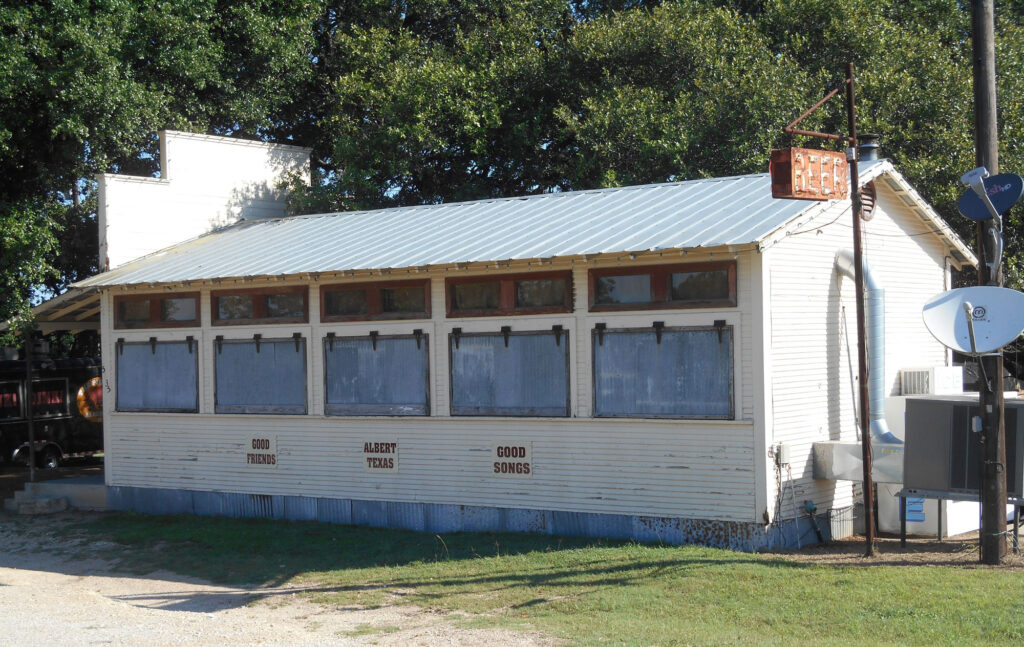
Today South Texas icehouses are hard to find but not extinct. For a taste of modern icehouse culture, take a detour from the wine road and spend a lazy afternoon under the live oak trees at Albert Ice House on Highway 1623 between Stonewall and Blanco.
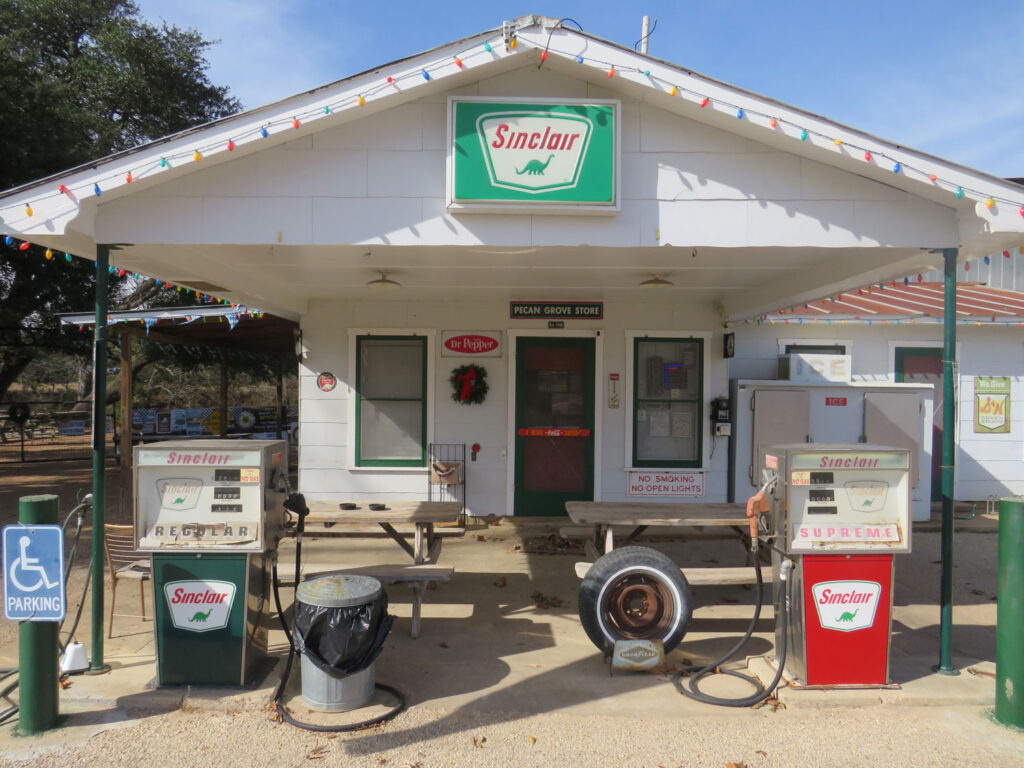
For a more authentic experience, lock lips with a longneck at Pecan Grove Store, 5 miles northeast of Fredericksburg on the Llano Highway. When I’m under the shade trees at Pecan Grove, with a firm grip on a sweaty bottle of Shiner Bock, even the warmest summer afternoon feels as cool as the hinges on an icehouse door.